Molecular
Systematic
Music
While studying an audio recording of my ensemble a few years back, I had a visual encounter: music was no longer just sound, but in my mind’s eye, notes had been transformed into molecules. The interpretation of this vision led me to molecular biology, which allowed me to compose and improvise music in entirely different, new, and profound ways.
This transformative experience reformatted my brain. It began to build a network of new associations between music and molecular biology, using metaphor and analogical inferences to draw conclusions between the two mediums.
Explore the system
From Atom to
Composition
Molecular Systematic Music is an evolving framework for composition and improvisation developed by saxophonist and composer James Brandon Lewis. Bringing music, visual art, and molecular biology into dialogue, it draws inspiration from DNA and the double helix to imagine new ways of organizing sound. Its foundations are metaphor, intuition,semiology (the study of signs and symbols), music, and molecular biology. Rather than translating genetic data directly into musical frequencies, the system uses scientific structures as creative models, allowing a visual idea to become the starting point for a musical one.
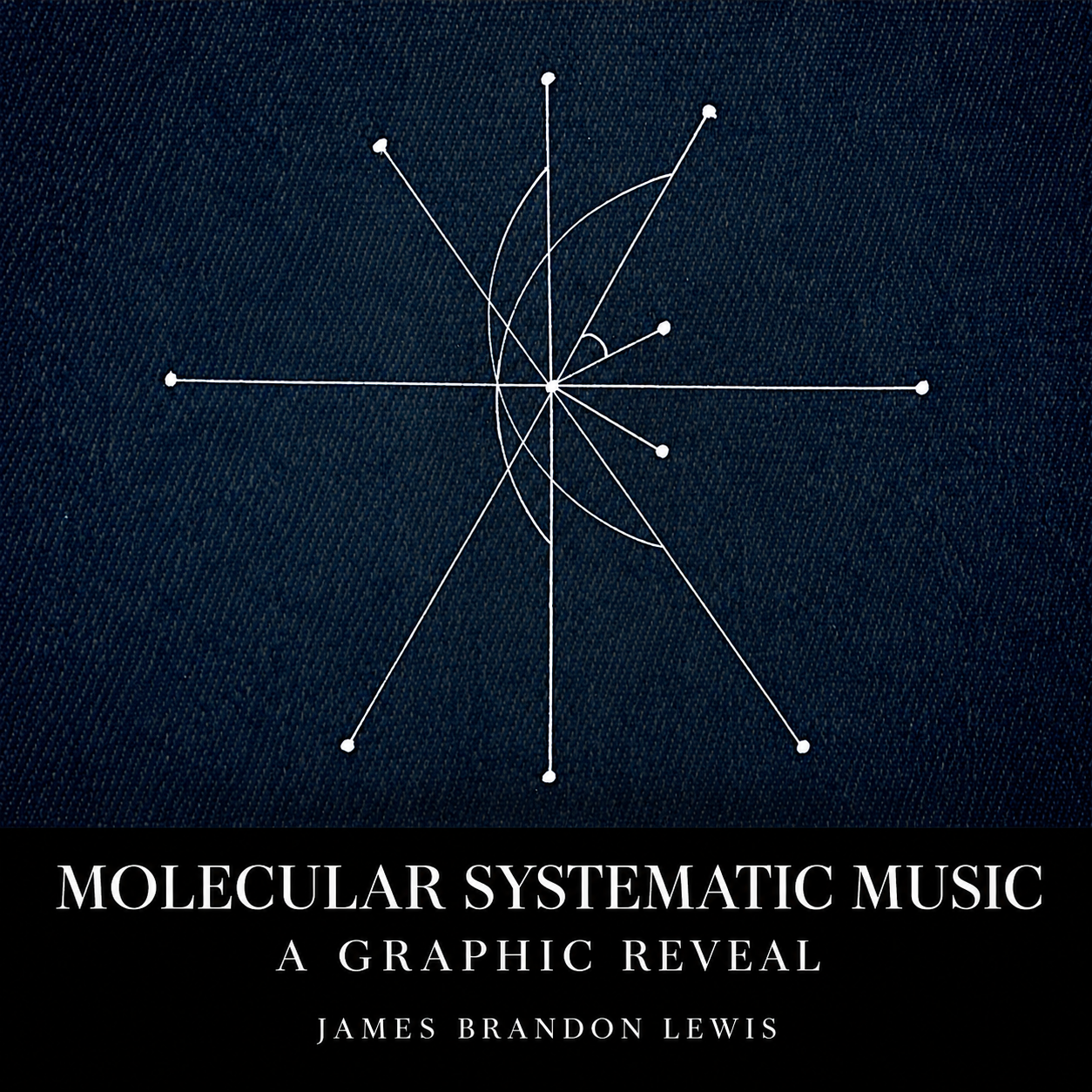
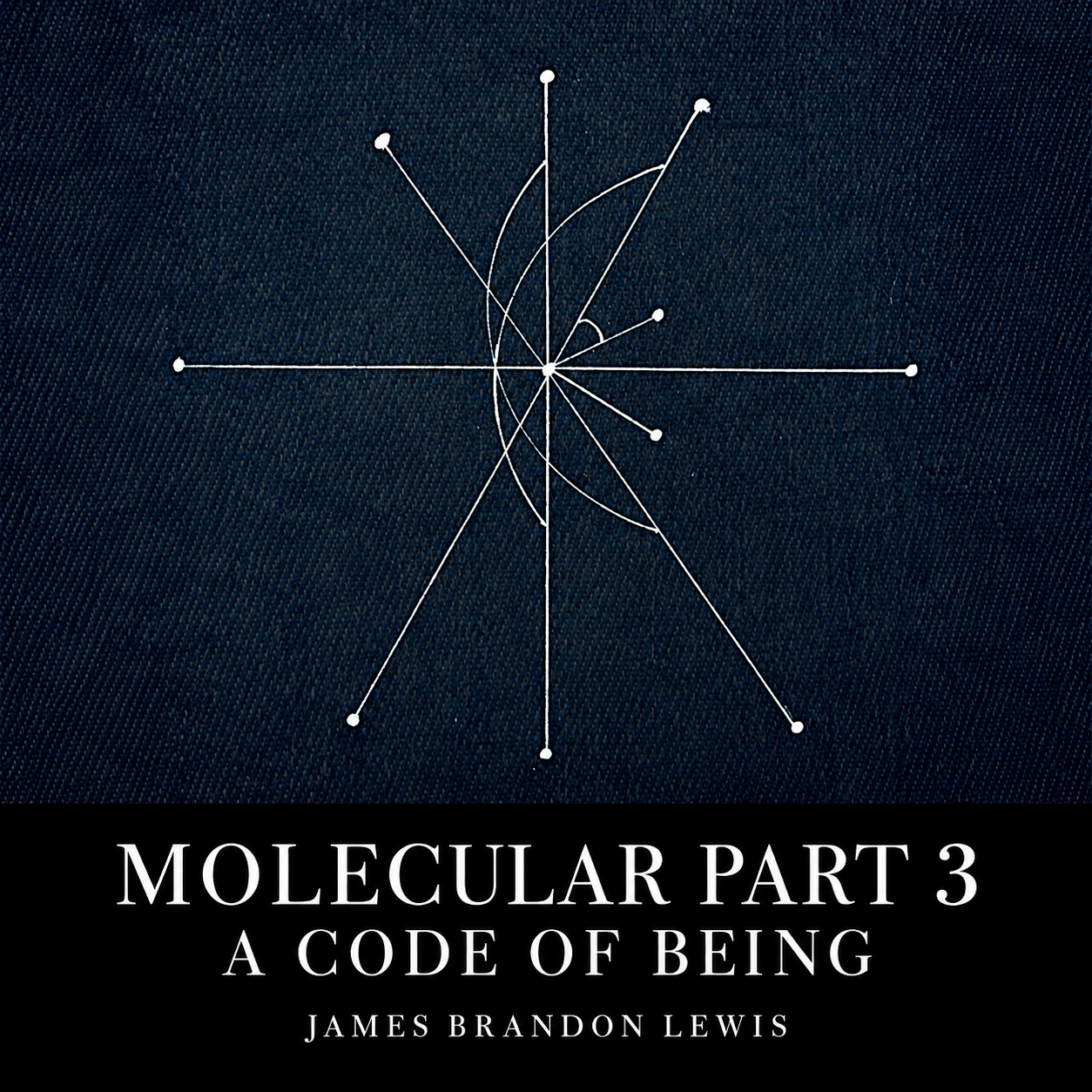
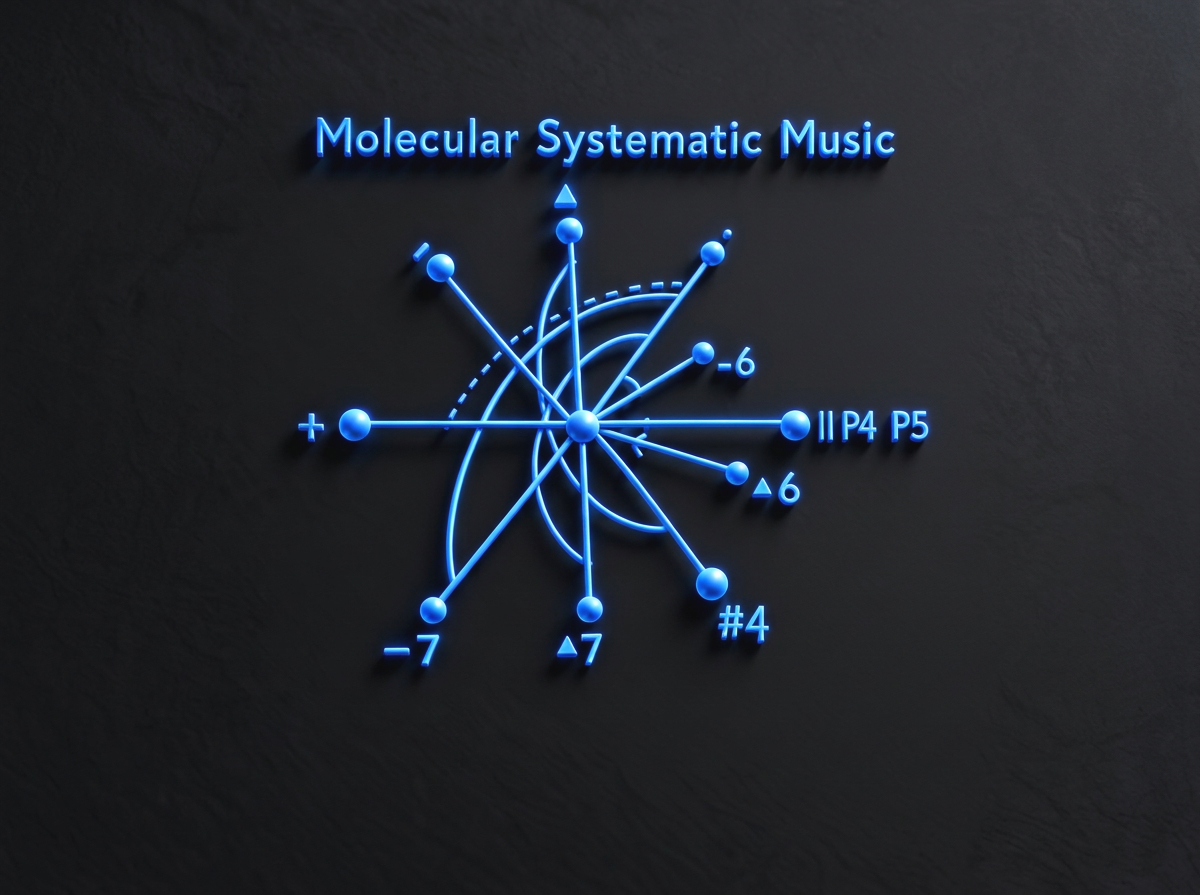
At the heart of the system is the Polaris Molecule, Lewis's visual framework for exploring relationships among notes. Dots and connecting lines represent musical materials and their connections, while intervallic pairings and harmonic bonding elements organize distances and harmonic relationships. These components generate seven molecular harmonic configurations and seventeen six-note strands, offering a palette for constructing melody and harmony. The framework serves both as a tool for creating new compositions and as away to hear existing music differently, connecting visual thinking with the practical work of composing and improvising.
Molecular Systematic Music is also a philosophy of artistic self-discovery. Working with music's smallest elements, from an individual note to a short musical cell, it explores how small ideas can grow into larger forms. Focused practice, experimentation, and reflection help these materials become part of a musician's personal language. Lewis calls this individuality "Artistic DNA": the distinctive musical identity shaped by lived experience, intuition, and expression. The aim is not simply to build a system of notes, but to create a framework through which an artist can recognize, develop, and communicate an authentic musical voice.
Learn more


An index of molecular harmonic configurations
Research
MOLECULAR SYSTEMATIC MUSIC: PART I
PDF
About
James Brandon Lewis is a saxophonist and composer whose work connects music, visual art, and science through metaphor. His PhD research in Creativity at Rowan University, Symphony of Cells: Creative Encounter & the Path to Molecular Systematic Music, explores how encounters with music, spirituality, and science shape artistic identity. He uses metaphor to interpret his perceptions and find the “through line”: the connective tissue of commonality across disciplines. This approach informs Molecular Systematic Music, his framework for composition and improvisation.
As a saxophonist and composer, I have organized my life in creativity into three main areas of “creative encounter”: music, science, and spirituality, “the basics” of who I am as an artist. These themes are interwoven into the fabric of my artistic DNA. My experiential makeup as an artist is a beautiful symbiosis of creativity that functions now as a singular fingerprint, my artistic identity.
In the following sections, using myself as a case study, I examine the role of “creative encounters” within my life as a series of transformative experiences both micro and macro, the catalyst for shaping and building my artistic DNA. If you think about unique defining moments you’ve had in your life and how they’ve shaped you, that’s your artistic DNA.
Autoethnography is a qualitative research method that tells the story of the researcher using their experience in the field as validating data.
Autoethnography embraces how personal experience is infused with cultural norms and expectations, and autoethnographies engage in rigorous self-reflection often referred to as “reflexivity,” in order to identify and interrogate the intersections between self and social life.
Molecular Systematic Music
Molecular Systematic Music is an evolving framework for composition and improvisation developed by saxophonist and composer James Brandon Lewis. Bringing music, visual art, and molecular biology into dialogue, it draws inspiration from DNA and the double helix to imagine new ways of organizing sound. Its foundations are metaphor, intuition,semiology (the study of signs and symbols), music, and molecular biology. Rather than translating genetic data directly into musical frequencies, the system uses scientific structures as creative models, allowing a visual idea to become the starting point for a musical one.
At the heart of the system is the Polaris Molecule, Lewis's visual framework for exploring relationships among notes. Dots and connecting lines represent musical materials and their connections, while intervallic pairings and harmonic bonding elements organize distances and harmonic relationships. These components generate seven molecular harmonic configurations and seventeen six-note strands, offering a palette for constructing melody and harmony. The framework serves both as a tool for creating new compositions and as away to hear existing music differently, connecting visual thinking with the practical work of composing and improvising.
Molecular Systematic Music is also a philosophy of artistic self-discovery. Working with music's smallest elements, from an individual note to a short musical cell, it explores how small ideas can grow into larger forms. Focused practice, experimentation, and reflection help these materials become part of a musician's personal language. Lewis calls this individuality "Artistic DNA": the distinctive musical identity shaped by lived experience, intuition, and expression. The aim is not simply to build a system of notes, but to create a framework through which an artist can recognize, develop, and communicate an authentic musical voice.